
It's one of the first big questions parents ask: when should my child actually start nursery? Six months? A year? Wait until they're two or three? This guide brings together what UK child-development research and good early-years practice actually say — honestly, including the nuances — so you can make the decision that's right for your child and your family.
So, what is the best age to start nursery?
There is no single best age to start nursery. Child-development research and UK early-years practice agree that the right time depends on three things: your child's temperament, your family's circumstances, and the quality of the nursery itself — far more than on hitting a particular birthday.
In practice, most children in England start nursery between 9 and 18 months, usually as parental leave ends and the funded 30 hours for working parents become available from the term after a child turns nine months. Babies often settle quickly because they start before separation anxiety develops; two- and three-year-olds take readily to the social side of nursery. Each age has genuine advantages. What matters most is a gradual settling-in process, a consistent key person, and a setting your child feels secure in.
The rest of this guide looks at what the evidence says, how separation anxiety fits in, the pros and cons of starting at each age, and how funded hours shape the decision.
What does the research say about starting nursery young?
The largest UK study in this area is the government-funded Study of Early Education and Development (SEED), which followed nearly 6,000 children from the age of two. It found that attending formal group childcare — a nursery, nursery class or playgroup — was linked to better social and emotional outcomes: more pro-social behaviour, fewer peer problems, and stronger problem-solving and reasoning skills. The benefits were clearest in high-quality settings and were especially valuable for children from disadvantaged backgrounds.
SEED also surfaced one honest caveat worth knowing. A small group of children — around 3% — who spent more than 35 hours a week in group care, particularly those who started in their first year, showed slightly more conduct difficulties and a little less emotional self-regulation.
The practical takeaway is not “start late”. It's that the quality of care and a sensible number of hours matter more than the exact age your child begins. A good setting, a strong key-person relationship, and hours that suit your child are bigger factors in how well they do than whether they started at ten months or two years.
How does separation anxiety affect the right time to start?
Separation anxiety is a normal, healthy sign of attachment. It tends to emerge around 6 to 8 months, when babies develop a sense that you still exist when you leave the room, peak somewhere between roughly 10 and 18 months, and ease as children approach age three.
This is why some parents find a young baby or a confident three-year-old settles with fewer tears than a 12-to-15-month-old at the height of separation sensitivity. But it does not mean you should avoid those months. Children settle happily at every age — separation anxiety mainly affects how the first week or two feels, not whether your child will thrive at nursery.
Some studies have found that young children's levels of the stress hormone cortisol rise during the first days of childcare and then settle as the setting becomes familiar — which is exactly why a gradual, well-supported settling-in process matters so much. A strong relationship with a consistent key person is the single biggest buffer against settling stress, whatever age your child starts.
Starting nursery as a baby (around 3 to 11 months)
Many UK nurseries care for babies from a few months old. Parents often choose this age as shared parental leave or statutory maternity pay comes to an end, and because funded hours for working parents begin from the term after a baby turns nine months.
Why it can work well: many babies start before separation anxiety has fully developed, so the early settling-in can be smoother. Babies thrive on the warm, one-to-one attention a good baby room provides, and they benefit from sensory play, early communication, and gentle daily routines.
What to look for: babies in England are cared for in a dedicated baby room at a statutory ratio of one adult to every three under-twos. Ask how the room follows each baby's individual feeding, weaning and sleep routine rather than imposing a single timetable, and who your baby's key person will be. At Bojangles, our Baby Room (0–2 years) is a small, calm, sensory-rich space with a key-person system so every baby and family has a familiar face from the very start.
Starting nursery at 1 year old
Around the first birthday is the single most common time to start nursery in the UK — it lines up with the end of a year's parental leave and with the funded-hours entitlement for working parents.
Why it can work well: one-year-olds are curious, on the move, and ready for a richer environment than home can always offer — more space, more messy play, more things to climb on and explore. They begin to enjoy being around other children even before they truly play together.
The thing to plan for: twelve to fifteen months can coincide with the peak of separation anxiety. That's entirely manageable — it just means it's worth choosing a nursery that offers a proper, unhurried settling-in process and being prepared for a week or two of tears at drop-off before your child settles into the rhythm. Our guide to your child's first weeks at nursery walks through exactly how to make this easier.
Starting nursery at 2 years old
Two is often called the social “sweet spot” for starting nursery. Children move from playing alongside others to playing with them, and they gain hugely from learning to share, take turns, and make friends — the kind of social learning that's hard to recreate at home.
Why it can work well: language and imagination are developing fast, most two-year-olds are past the peak of separation anxiety, and they're ready to be challenged and stretched by skilled staff. This is also the age the SEED research associated with some of the clearest benefits from good-quality group care.
Funding to know about: some two-year-olds in England qualify for 15 funded hours a week if their family receives certain benefits, which can make this a practical time to begin. At Bojangles, two-year-olds are cared for in our Toddler Room (2–3 years), where independence and early friendships really take off.
Starting nursery at 3 years old
Starting at three is a good fit for families who didn't need childcare earlier, and for children who are particularly attached to a parent and may benefit from a little more time before their first separation.
Why it can work well: three-year-olds are usually talking well, often out of nappies, able to express their needs, and ready for the structured run-up to school. Nursery at this age builds confidence, independence, and the early literacy and numeracy that support a smooth start to reception. Every three- and four-year-old in England receives 15 universal funded hours, regardless of household income, so there's no cost barrier to a place.
One thing to bear in mind: a child who has spent very little time apart from their parents can sometimes find a first separation at three harder than a baby would — so the settling-in process still matters. At Bojangles, our Pre-School Room (3–5 years) works closely with families and local schools to build school-readiness and confidence.
How do funded childcare hours affect when to start?
For many families, funding is the practical trigger for the timing decision. Since September 2025, eligible working parents in England can claim 30 funded hours a week from the term after their child turns nine months, right through until the child starts school. To qualify, each parent generally needs to earn at least the equivalent of 16 hours a week at the minimum wage (around £10,000 a year) and under £100,000 of adjusted net income. You can apply from when your child is 23 weeks old.
On top of that, some two-year-olds qualify for 15 funded hours through certain benefits, and every three- and four-year-old receives 15 universal funded hours regardless of income. Funded hours pay for childcare only; nurseries commonly charge a small separate fee for meals on funded-only days.
Bojangles accepts all government-funded entitlements plus Tax-Free Childcare. For the full breakdown of what you're entitled to and how to claim it locally, see our guide to funded childcare hours in Shropshire.
How do I know if my child is ready for nursery?
For babies, “readiness” is less about the child and more about timing and the quality of the nursery — a good baby room with experienced staff can settle a very young child beautifully. For older babies and toddlers, encouraging signs include:
- Curiosity about, and interest in, other children
- Being able to accept comfort from a familiar adult who isn't you
- Coping reasonably with short separations (a grandparent, a friend)
- Growing independence — feeding themselves, exploring, showing preferences
- Enjoying new environments and play once they've warmed up
Just as important is parent readiness. Returning to work, wanting more social opportunities for your child, needing a routine, or accessing funded hours are all completely valid reasons to start. There is no checklist a child must “pass” before nursery — a good settling-in process exists precisely to bridge any gap.
How to make any starting age easier
Whatever age you choose, the same things make the transition smoother:
- Use a proper settling-in process — UK best practice is a minimum of three sessions, building from a short stay with you to a full day. Good nurseries offer extra sessions free if your child needs them.
- Lean on the key person. A named, consistent member of staff who builds a bond with your child and family is the strongest predictor of a happy start.
- Build up hours gradually rather than going straight to full-time, especially in the first couple of weeks.
- Keep goodbyes short, warm and consistent — lingering tends to prolong the tears.
- Talk about nursery positively at home and name the key person, so your child can picture who looks after them.
For a step-by-step walkthrough of the first fortnight, read what to expect in your child's first weeks at nursery.
So, when should my child start?
The honest answer is the one most parents find reassuring: there isn't a wrong age. Babies, one-year-olds, two-year-olds and three-year-olds all settle and flourish at nursery when the setting is good and the start is well supported. Let your family's circumstances, your funding, and your sense of your own child guide the timing — then focus your energy on choosing the right nursery and a gentle settling-in, which matter far more than the date on the calendar.
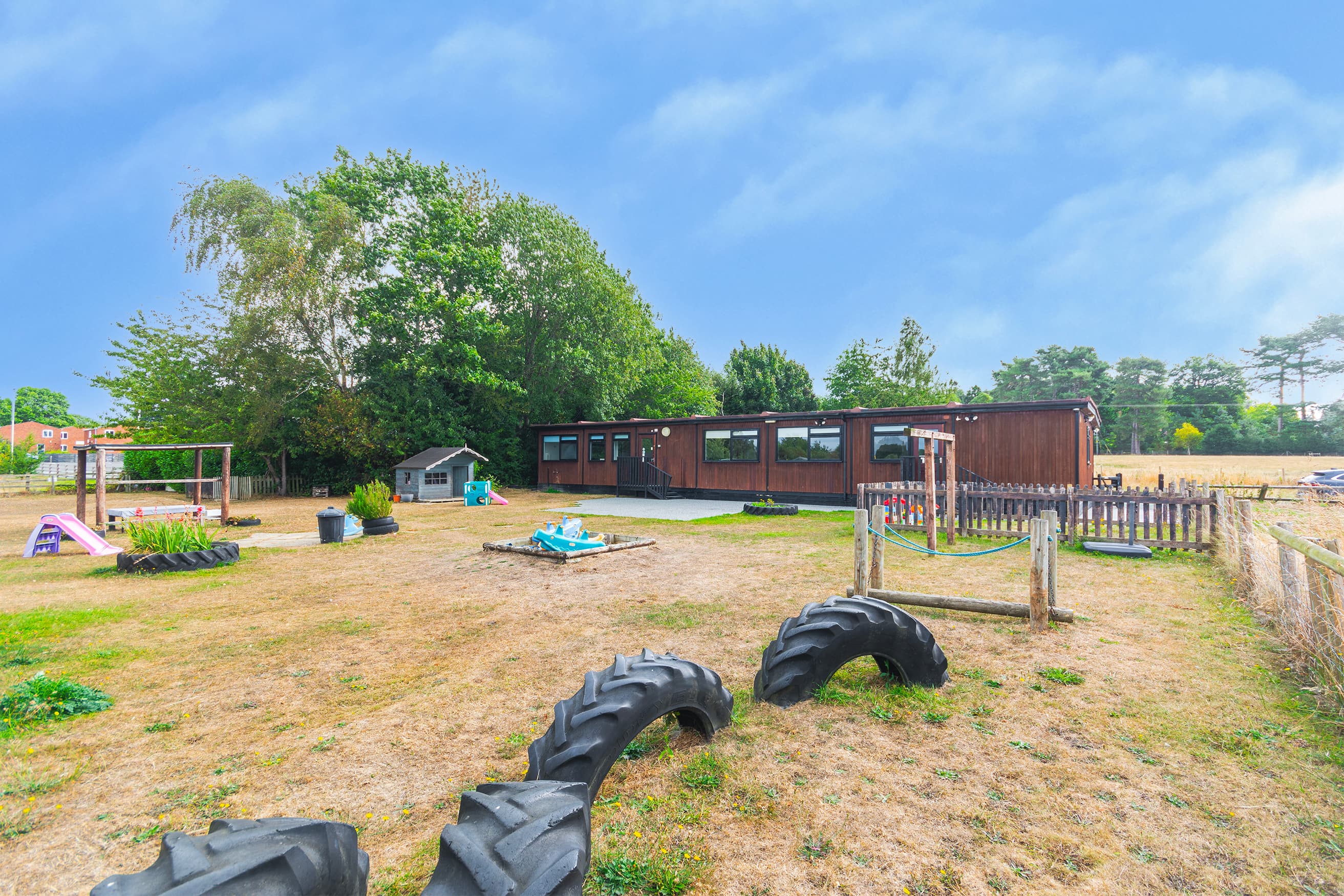
Bojangles Day Nursery is a family-run, Ofsted Good rated nursery (URN EY370743, inspected January 2022) in a purpose-built setting in Baschurch, near Shrewsbury. We've cared for children aged 0–5 since 1994, across our Baby, Toddler and Pre-School Rooms, with a key-person system and an unhurried settling-in process designed to support children at whatever age they join us.