Our Approach
Guided by EYFS, inspired by nature
The Early Years Foundation Stage
The Early Years Foundation Stage (EYFS) is the statutory framework that sets the standards for learning, development, and care for all children in England from birth to five years old. It ensures every child receives a broad, balanced education through purposeful play, strong relationships, and rich experiences.
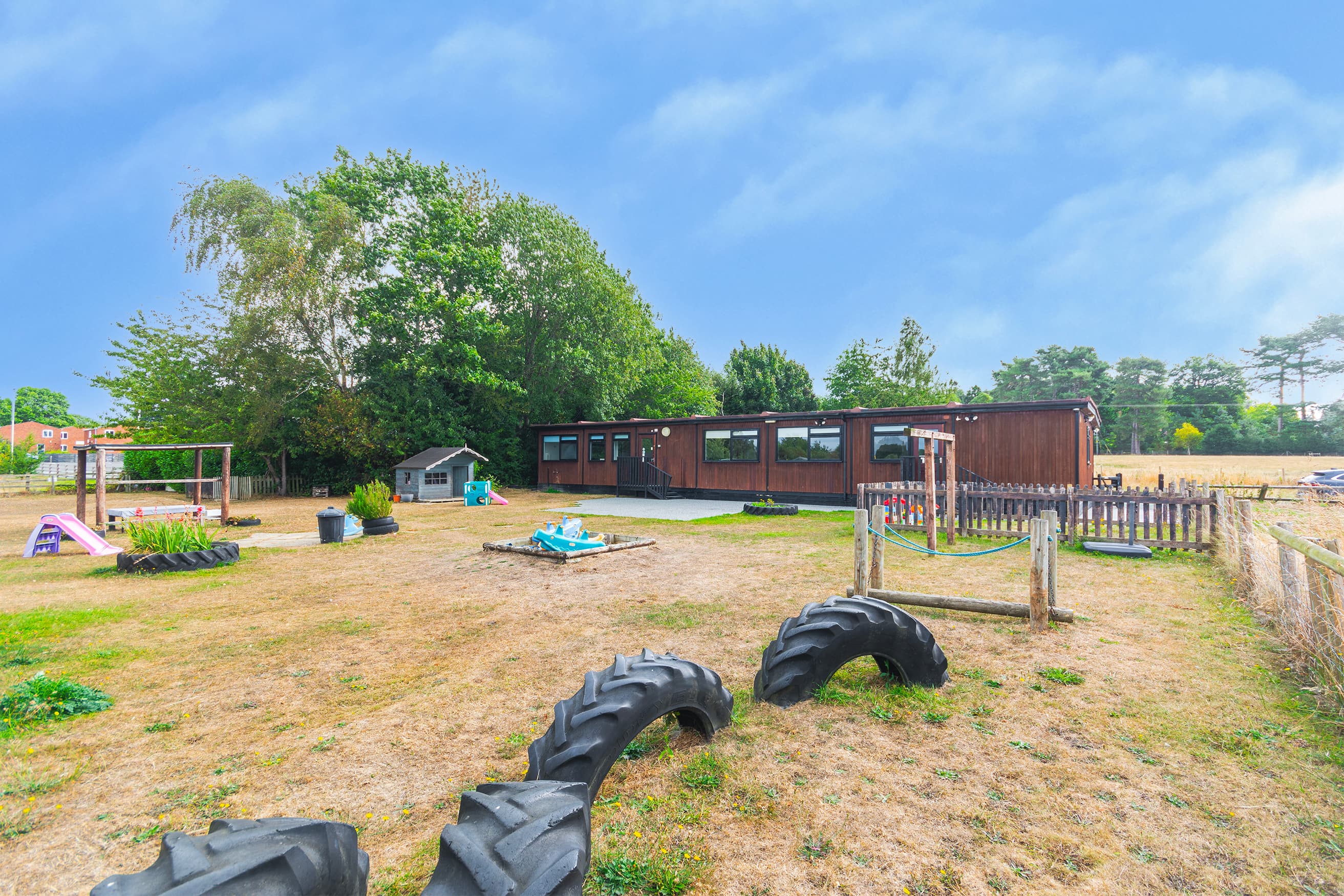
At Bojangles, we follow the EYFS wholeheartedly — but our rural setting in the heart of the Shropshire countryside allows us to bring it to life in a truly special way. Our spacious grounds, gardens, and surrounding natural landscape become our greatest teaching resource. Children don't just learn about nature — they learn through it, every day.
The Four Guiding Principles
Everything we do is shaped by the four overarching principles of the EYFS framework.
A Unique Child
Every child is a competent learner from birth, developing at their own pace and in their own way. We celebrate each child’s individuality, recognising their unique strengths, interests, and learning styles. Our key person approach ensures every child feels known, valued, and supported to grow in confidence and independence.
Positive Relationships
Children thrive when they feel safe and secure with the adults around them. Our warm, consistent team builds strong bonds with every child and family. We work closely with parents as partners, sharing your child’s progress through Tapestry and daily conversations, so learning continues seamlessly between nursery and home.
Enabling Environments
The EYFS recognises the outdoor environment as one of three core components of effective provision — and this is where Bojangles truly shines. Our rural setting, spacious grounds, and gardens provide a rich, stimulating landscape where children can explore, take managed risks, and connect with the natural world every single day.
Learning & Development
Children develop and learn in different ways and at different rates. We provide a broad, balanced curriculum across all seven areas of learning, delivered through purposeful play and adult-guided activities. Our practitioners observe, assess, and plan for each child’s next steps, ensuring every child is supported and stretched appropriately.
Seven Areas of Learning
The EYFS curriculum is organised into three prime areas — the essential foundations — and four specific areas that build upon them.
PrimeThe essential foundations
Communication and Language
Developing spoken language, listening skills, and the confidence to express ideas and hold conversations.
At Bojangles: Storytelling around our outdoor campfire circle, singing songs on nature walks, and describing the creatures and plants they discover in the garden.
Physical Development
Building both gross motor skills (running, climbing, balancing) and fine motor skills (drawing, cutting, manipulating small objects).
At Bojangles: Climbing over our adventure equipment, balancing on logs, digging in the garden, and navigating the uneven terrain of our grounds — building strength, coordination, and confidence naturally.
Personal, Social & Emotional Development
Understanding and managing feelings, forming friendships, developing self-confidence, and learning to cooperate with others.
At Bojangles: Working together to build dens, taking turns on outdoor equipment, caring for plants in the garden, and learning to assess and manage risks during adventurous outdoor play.
SpecificBuilding on the foundations
Literacy
Developing a lifelong love of reading and the foundations of writing through phonics, stories, and mark-making.
At Bojangles: Mark-making with sticks in mud, reading stories in our cosy outdoor den, writing letters in sand trays, and exploring books about nature, animals, and the seasons.
Mathematics
Building a deep understanding of numbers, patterns, shapes, and measures through hands-on exploration.
At Bojangles: Counting conkers and pinecones, sorting leaves by shape and size, measuring how tall the sunflowers have grown, and exploring capacity with water and sand play outdoors.
Understanding the World
Making sense of the physical world, the community, and the environment through exploration and observation.
At Bojangles: Watching tadpoles grow, observing the changing seasons first-hand, planting seeds and watching them sprout, exploring mini-beasts in the garden, and talking about the weather and the world around them.
Expressive Arts & Design
Encouraging creativity and imagination through art, music, dance, role-play, and design.
At Bojangles: Creating nature collages with leaves and petals, painting with mud, building imaginative worlds in our outdoor play area, making music with natural instruments, and using role-play to act out real and imagined experiences.
Learning Through Play
Play is at the heart of the EYFS. The framework recognises that children learn best when they are actively engaged, following their own interests, and having fun. At Bojangles, we provide a balance of child-initiated play — where children choose what to explore — and adult-guided activities that introduce and extend learning within a playful context.
Our outdoor environment offers uniquely rich play opportunities that simply can't be replicated indoors. Children build dens from branches and blankets, experiment in our mud kitchen, splash through puddles in their wellies, dig for treasure in the sand, race across the grass, and let their imaginations run wild in our open-air play spaces.
Nature itself is the ultimate open-ended resource. A stick can be a magic wand, a fishing rod, or a paintbrush. A pile of leaves can be a bed for a teddy bear, a counting activity, or the raw material for a collage. This kind of open-ended, imaginative play builds creativity, problem-solving skills, and a deep sense of wonder about the world.
How Children Learn
Alongside the seven areas of learning, the EYFS identifies three characteristics of effective learning — the behaviours and attitudes that help children become confident, capable learners.
Playing and Exploring
Children investigate, experience new things, and “have a go.” They show curiosity, use their senses to explore, and are willing to try new activities. In our outdoor environment, this means poking at frost on a winter morning, splashing through puddles, turning over logs to find woodlice, and climbing that little bit higher on the frame.
Active Learning
Children concentrate, keep trying when things are tricky, and enjoy their achievements. Nature provides endless opportunities for persistence — balancing along a wobbly log, carefully carrying water without spilling, or patiently waiting for a seed they planted to finally break through the soil.
Creating and Thinking Critically
Children develop their own ideas, make connections, and work out strategies for doing things. Outdoors, this happens constantly — figuring out how to build a den that stays up, deciding which materials float in the water tray, or working out how to roll a tyre across the bumpy grass.
Tracking Your Child's Progress
We believe assessment should be meaningful and purposeful — not a box-ticking exercise. Our practitioners observe children during their play and interactions, building a rich picture of each child's development over time. These observations are shared with you through Tapestry, our secure online learning journal, so you can follow your child's journey in real time.
Between the ages of two and three, we carry out a formal Progress Check at Age 2 as required by the EYFS. This is a short written summary focusing on the three prime areas of learning, celebrating your child's strengths and identifying any areas where extra support might be helpful. We always discuss this with you and, where appropriate, work alongside health visitors and other professionals.
Throughout your child's time with us, we plan individual next steps to ensure they are always supported and gently challenged. Our approach is child-led and responsive — we follow each child's interests and build on what they already know and can do.
Want to see our approach in action?
Come and visit us — we'd love to show you around our nursery and grounds.
Book a Visit