
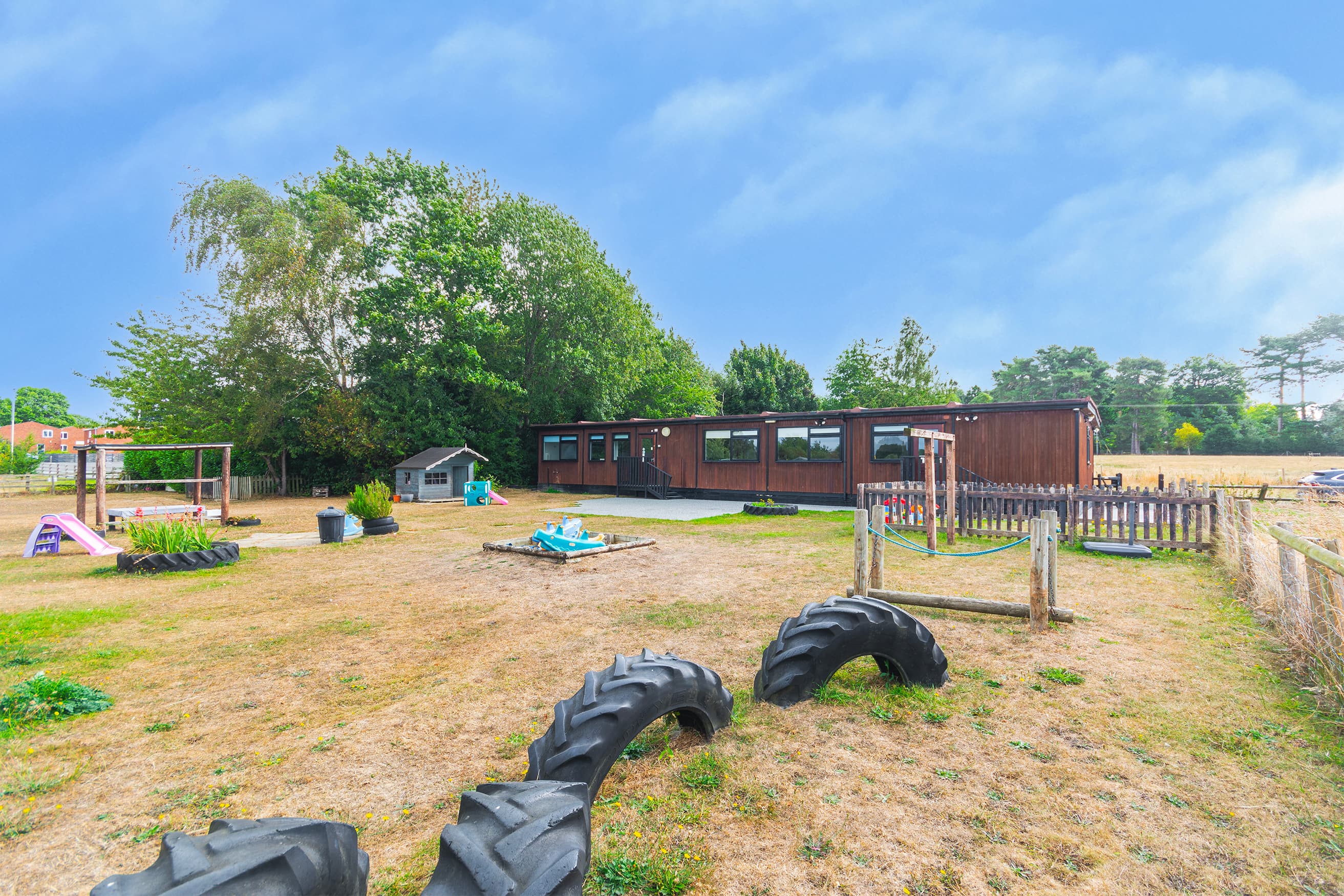
Choosing a nursery for your child is one of the biggest decisions you'll make as a parent. This guide answers the questions parents in Shrewsbury and across Shropshire most often ask when starting the search — what to look for, what funding you're entitled to, and what a good nursery actually looks like from the inside.
What is a day nursery, and how is it different from a pre-school or childminder?
A day nursery is a registered childcare setting that cares for children from birth to age 5, typically open year-round from around 8am to 6pm. Day nurseries offer full-day care and follow the statutory Early Years Foundation Stage (EYFS) framework, with children grouped by age into rooms — babies, toddlers, and pre-school.
A pre-school is usually for children aged 2–4 and runs shorter sessions that follow school terms — morning or afternoon only, closed during school holidays. Pre-schools also follow the EYFS but don't generally provide full-day care.
A childminder is a self-employed individual registered with Ofsted who cares for a small number of children in their own home. Childminders offer flexibility and a home-like environment, but fewer peer interactions and less specialist equipment than a nursery setting.
How do I check a nursery's Ofsted rating in Shropshire?
Every registered childcare setting in England is inspected by Ofsted, and you can read any Shropshire nursery's most recent report for free at reports.ofsted.gov.uk. Search by nursery name, postcode, or unique reference number — every registered provider has a URN.
From 10 November 2025, Ofsted moved to a new inspection framework for early years. Instead of a single overall judgement, each nursery now receives a report card with colour-coded grades across several areas, using a five-point scale: Exceptional, Strong standard, Expected standard, Needs attention, or Urgent improvement. Safeguarding is graded separately as simply “met” or “not met”, with a short narrative explaining the reason.
Older reports (issued before November 2025) still use the previous Outstanding / Good / Requires Improvement / Inadequate labels. Both systems will coexist on the Ofsted website for some years as settings are re-inspected. When comparing nurseries, check the inspection date as well as the grade — an older report describes the setting at that point in time, not today.
What funded childcare hours am I entitled to in Shropshire?
As of 2026, working parents in England are entitled to substantial funded childcare hours delivered through settings like day nurseries. From age 9 months until a child starts school, working parents earning between roughly £9,500 and £100,000 per year are eligible for 30 funded hours per week during term time, or around 22 hours weekly when stretched across the year.
Parents of 2-year-olds receiving certain benefits are entitled to 15 funded hours per week regardless of working status. All 3 and 4-year-olds in England receive 15 universal hours regardless of household income.
Hours are funded by the government but paid directly to your chosen nursery. Apply through childcare.gov.uk — Shropshire Council processes claims for local settings. Funded hours cover childcare only; nurseries commonly apply a separate charge for meals and consumables on funded-only days.
What age can my child start nursery?
Most day nurseries in Shropshire accept children from 3 months old, though some take babies from 6 weeks. There is no statutory minimum age for nursery attendance in the UK — the earliest start date depends on the individual nursery's policy and room capacity.
In practice, most parents start their child in nursery between 9 and 12 months, often timed with the end of shared parental leave and the 9-month funded hours entitlement for working parents. Babies under 2 are usually cared for in a dedicated Baby Room with a statutory staff-to-child ratio of 1:3.
There is no single “right” age to start. What matters more is the nursery's approach to settling-in sessions, the key-person system, and how staff communicate with parents during the first few weeks — those are the practical indicators of a supportive transition.
What should I look for on a nursery visit?
A visit is the most important part of choosing a nursery, and the things that matter most are observable rather than marketed. Look for:
- Staff engagement: Are practitioners at the children's level, talking with them, or managing from above? Do children approach staff freely?
- Atmosphere: Is the room calm and purposeful, or chaotic? Are children absorbed in their activity?
- Environment: Are resources accessible, clean, and in good repair? Is there genuine outdoor space, used in all weathers?
- Transitions: Watch how staff handle nappy changes, mealtimes, and tidy-up — these reveal the setting's real culture.
- Your child's reaction: If they're with you, notice whether they want to explore.
A good nursery welcomes unannounced visits, answers questions openly, and offers a proper settling-in process of several sessions before a paid-for start date.
What questions should I ask the nursery manager?
Ask questions that reveal how the nursery actually runs, not just its marketing copy. The most useful include:
- What is your staff turnover like, and how long has the manager been in post?
- What are your staff-to-child ratios in each room? Statutory minimums are 1:3 for under-2s, 1:5 for 2-year-olds, and 1:8 for 3–5s in non-school settings.
- What qualifications do your practitioners hold? Most UK nurseries have Level 3 qualified staff; stronger settings hold Level 6 or Level 7 (graduate-level) leadership.
- How do you share daily updates — an app, a diary, or end-of-day conversations?
- What is your settling-in process?
- How do you support children with additional needs, allergies, or English as an additional language?
- What's included in the fee, and what's charged separately?
How much does a day nursery cost in Shropshire?
Day nursery fees in Shropshire typically range from £55 to £75 per day for a full 10-hour day in 2026, placing the county below London and major cities but broadly in line with the West Midlands regional average. Half-day sessions generally cost around 60% of the full-day rate.
Most Shropshire nurseries include breakfast, lunch, tea, and snacks in the daily fee. When children attend on government-funded hours only, nurseries commonly charge a separate meals or consumables fee — typically £7 to £12 per funded day — because the funded hourly rate paid by local authorities doesn't cover food costs.
Parents can combine Tax-Free Childcare — a 20% government top-up, capped at £2,000 per child per year — with funded hours to reduce costs further. Apply for Tax-Free Childcare through childcare.gov.uk; payments go into a dedicated account that the nursery can draw from directly.
What is the EYFS, and why does it matter?
The Early Years Foundation Stage (EYFS) is the statutory framework every Ofsted-registered childcare setting in England must follow for children from birth to age 5. It covers learning and development, safeguarding, welfare requirements, staff qualifications, and ratios.
The EYFS defines seven areas of learning — three prime areas (communication and language, physical development, personal/social/emotional development) and four specific areas (literacy, mathematics, understanding the world, and expressive arts and design). Good nurseries don't teach these through formal lessons — they weave them into play, routines, conversation, and outdoor exploration.
When a nursery describes itself as “play-based”, “child-led”, or “nature-led”, that's a pedagogical choice made within the EYFS, not outside it. Ask the setting how they put the EYFS into practice day-to-day, rather than how they “cover” it.
How long are nursery waiting lists in Shrewsbury and Shropshire?
Waiting lists vary significantly by area, room, and season. In Shrewsbury and larger villages, Baby Room places at popular nurseries can be booked six to twelve months in advance — particularly for September starts and for settings with strong Ofsted ratings. Pre-School Rooms (age 3–5) generally have shorter waits because capacity is higher and funded-hours turnover is faster.
Rural Shropshire settings — Baschurch, Wem, Oswestry fringe, Shawbury, Minsterley — often have more availability than central Shrewsbury but serve smaller catchment areas. If you are expecting a baby, joining a waiting list during pregnancy is normal and not considered premature.
Ask how the waiting list works: some nurseries offer places strictly by application date, others prioritise siblings, staff children, or full-time bookings. A small deposit or registration fee to hold a place is standard practice.
Next steps
The best thing you can do is visit two or three nurseries, take notes immediately afterwards, and trust how each setting felt. Reading inspection reports and comparing fees matters, but a nursery is ultimately a community of people — and you will learn more in thirty minutes on-site than from any brochure.